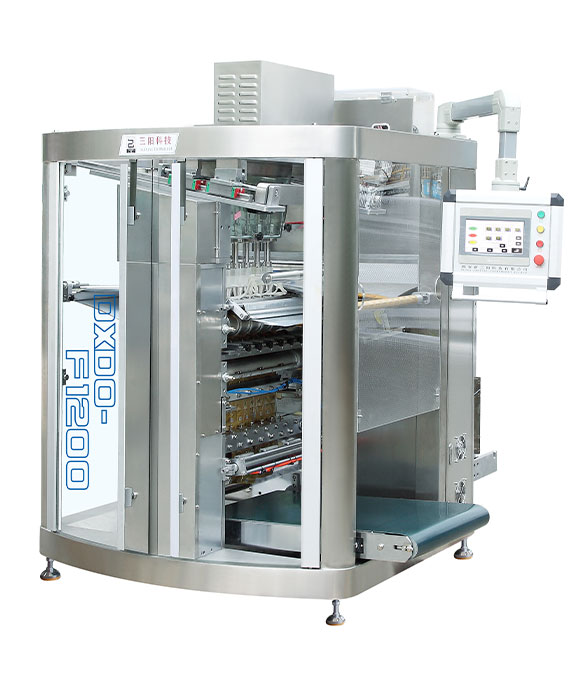
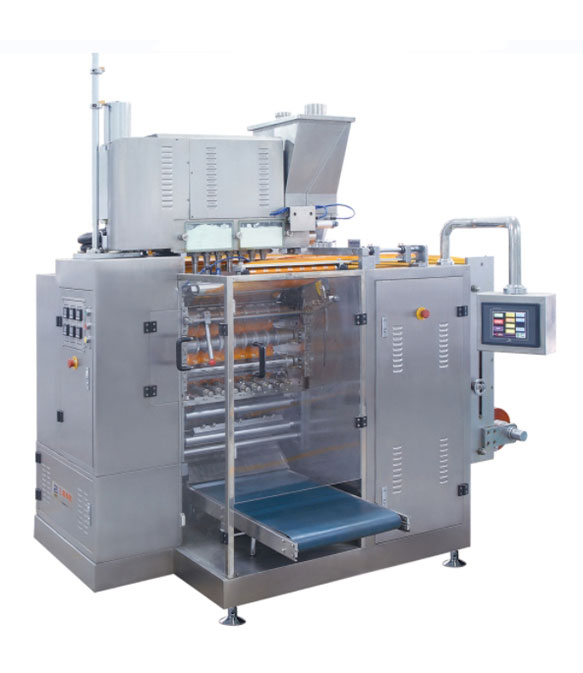
You have just finished a production run of premium protein powder. The line ran smoothly for hours—no alarms, no jams. Then quality control walks over with a sample bag. It is 3 grams short. You pull ten more from the line; each one tells the same story. Your auger filling system has been quietly underfilling every single package.
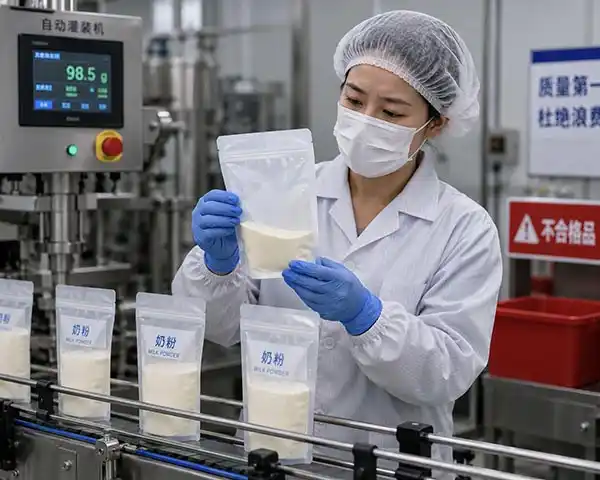
Inconsistent fill weight is one of the most common complaints among powder processing operations, leading to product waste, customer complaints, and regulatory non-compliance. Underfilling also damages brand credibility—customers receiving less than they paid for rarely return. The good news? Most underfilling issues trace back to a handful of root causes, and with systematic diagnosis, you can correct them without scrapping your current setup.
Below is a breakdown of the nine most common reasons your filler is underfilling, how to diagnose each, and what to do about it.
Bulk density is the weight of a given volume of powder. When bulk density changes, the same volume no longer equals the same weight. This is the single most common culprit behind underfilling.
Think of it this way: scoop a cup of flour from a bag and weigh it. Tap that cup on the table to settle the contents, then top it off with more flour. The second cup weighs noticeably more, even though the volume never changed. Exactly the same thing happens inside your auger filler when powder flow into the auger is uneven.
How to fix it: Monitor hopper head pressure. Unstable hopper levels create a ripple effect—one moment the auger encounters densely packed powder, the next it is dealing with looser material. Maintaining a consistent fill level in the hopper is essential for achieving stable head pressure and consistent bulk density at the auger screw. Consider installing level sensors to trigger refill only when needed.
This is closely related to bulk density but deserves its own mention. When the powder level in your hopper fluctuates, the auger screw experiences varying head pressure. Inconsistent head pressure directly translates to inconsistent auger flight filling, leading to short-filled or overfilled packages.
How to fix it: Install a horizontal infeed screw with level sensor control. This ensures the hopper maintains a uniform fill level, which keeps head pressure consistent and weight control stable.
If your powder forms a bridge or a rathole, the auger may starve between fills. This results in intermittent underfills that are maddeningly difficult to trace.
Powder bridging is a top cause of underfills, yet many operators only notice it when the hopper is empty—by which time the damage is already done. Cohesive powders such as protein powder, cocoa, turmeric, and brown sugar are especially prone to this behavior.
How to fix it: During operation, watch the powder surface in the hopper for at least 30 seconds. Does it flow smoothly toward the auger intake? Or do you see stagnant zones or funnel-shaped holes? Install hopper agitation systems or vibrators to break bridging before it starts. For cohesive powders, never let the hopper drop below 20% capacity—low head pressure accelerates bridging.
Auger tooling is a consumable. Over time, abrasive powders gradually wear down the auger flights and contact surfaces. As wear increases, the effective displacement volume of the screw decreases, and even the correct number of rotations delivers less powder than intended.
How to fix it: Remove the hopper guard and visually inspect the auger for uneven wear or chipping on a weekly basis. Run a gloved finger along the flights—rough patches indicate wear. If your auger is only rotating 1–2 times per fill and weight control is off, the tooling may be too large for the application. Conversely, low fills often signal that the screw pitch has worn down and the effective volume per revolution has dropped.
The optimum rotation for most auger fillers is about three to four turns per fill. When the auger rotates too few times (e.g., one turn per fill), any minor variation in powder density or flowability is magnified.
How to fix it: If your current setup uses very few rotations per fill, consider swapping to a smaller-diameter auger that requires more turns to deliver the same volume. This increases resolution and reduces the impact of density fluctuations. Also, ensure your dosing control system allows for precise adjustment of rotation counts.
You have probably never heard of permeability as a cause of underfilling, but it is a major hidden culprit. Low-permeability powders trap air between particles. When that trapped air releases in bursts, bulk density shifts unpredictably, causing the feeder to surge and drift.
This explains why a powder can pass a simple flowability test yet still dose poorly. The trapped air changes local density and effective stress, making the powder behave inconsistently mid-run.
How to fix it: Install proper venting pathways in your hopper and filling system. Use aeration aids or vacuum deaeration tooling to remove entrapped air before the powder reaches the auger screw. If instability starts right after a refill or worsens at higher feed rates, permeability is almost certainly on your shortlist of suspects.
Fine or high-moisture powders tend to stick inside the nozzle. Over time, residue builds up, narrowing the flow path and restricting powder delivery. Even 0.2 grams of caked material can alter displacement volume enough to throw off your fill weight in high-speed lines.
How to fix it: Keep a dedicated soft brush and food-grade compressed air near the machine. Never use metal tools that could score the nozzle surface. During daily checks, examine the nozzle opening for compacted powder or signs of wear.
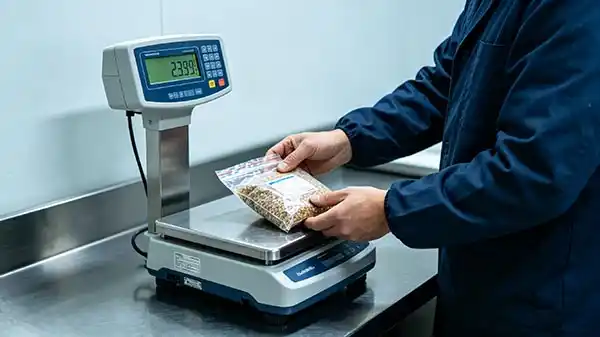
Your filler might have been perfectly calibrated last month, but temperature shifts, vibration, and normal mechanical wear can gradually shift calibration. Operators who rely solely on the machine's internal counter for quality control often discover drift only after hundreds of underweight packages have already shipped.
How to fix it: Run five sample containers at the start of each shift and weigh each on a calibrated check scale. Record the average and range. If any sample deviates beyond your tolerance—typically ±1% for most applications—stop and recalibrate before resuming. If you see a gradual drift up or down over three consecutive days, the auger drive coupling or motor encoder may need attention.
Humidity is a major enemy of powder filling accuracy. Powder absorbs moisture from the air, which causes clumping, changes weight, and hurts flowability. A powder that fills accurately on a dry winter morning may underfill dramatically during humid summer afternoons. Free-flowing powders can even become cohesive at higher moisture levels, altering flow behavior entirely.
How to fix it: Maintain ambient humidity between 30% and 50% in your production area. Use dehumidifiers if necessary. Keep temperature stable—the larger the temperature swings, the more powder density changes. Take a moisture reading of the powder daily and document it alongside your fill weights—you will often see a direct correlation.
The best way to stop underfilling before it starts is a consistent daily check routine. Here is what to cover in 10 minutes every shift:
Check the auger and nozzle for wear, buildup, or damage
Verify fill weight accuracy with sample containers on a calibrated check scale
Inspect hopper flow—watch for stagnant zones, bridging, or “plopping.”
Listen for unusual vibrations or grinding noises
Record humidity and powder moisture readings
When to Consider Upgrading Your Filling Solution
If you have systematically addressed all nine root causes and are still battling inconsistent fills, the issue may lie in the fundamental architecture of your filler. Older clutch-brake systems suffer from “coasting”, while volumetric fillers without weight-feedback loops cannot compensate for batch-to-batch density variation.
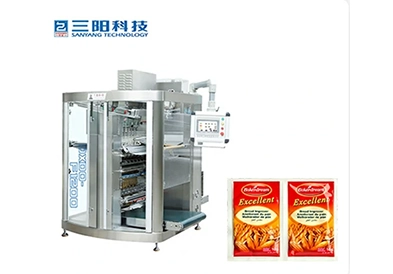
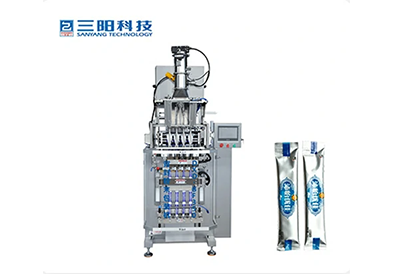
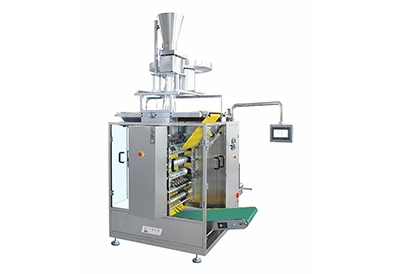
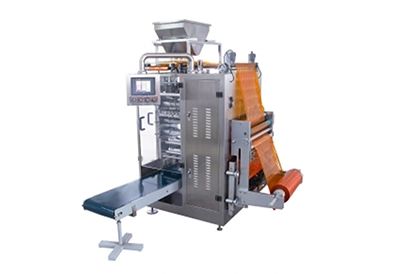
If you are ready to explore a more reliable solution for powder filling, SanYang offers auger-based dosing systems engineered for precision across a wide range of powder types—from free-flowing spices to cohesive protein blends. Our filling equipment range includes options with servo-driven motors that eliminate coasting, integrated checkweighers for real-time feedback, and customizable auger tooling to match your specific powder characteristics. Contact our team for a consultation or to request a test run with your product.
References & Disclaimer
Smart Weigh. “What Are the Common Issues with Washing Powder Filling Machine and How to Solve Them?” (2025)
Rovema North America. “Improve Auger Filler Accuracy: How to Maintain Consistent Fill Weight” (2025)
Soontac Intelligent Equipment. “Common Problems With Powder Filling Machines” (2025)
PowderTechnology.info. “Powder Permeability, The Hidden Cause of Dosing Instability” (2025)
Sunter Machinery. “Feeling Accuracy Anxiety? How Can You Conquer Powder Filling Precision?” (2025)
MOM Packaging. “Technical glossary of industrial powder filling” (2026)
Disclaimer: The information provided in this article is for general guidance only. Always consult your equipment manufacturer for model-specific troubleshooting and maintenance procedures.

 English
 Pусский
 Español
 عربي
عربي .jpg)