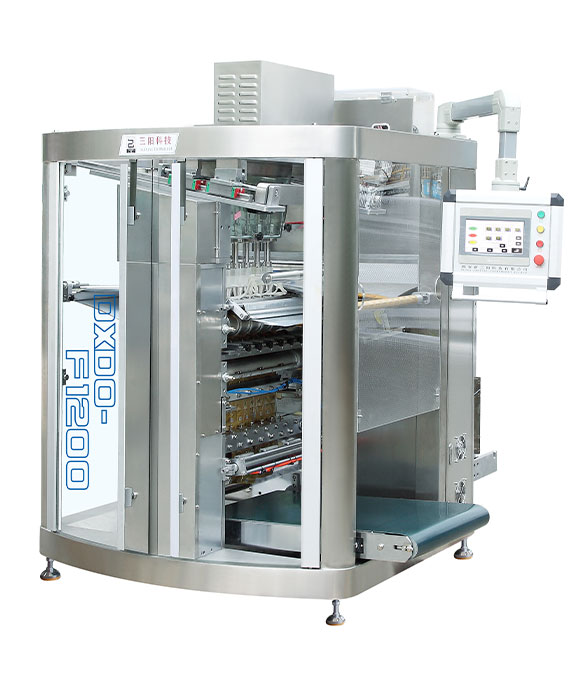
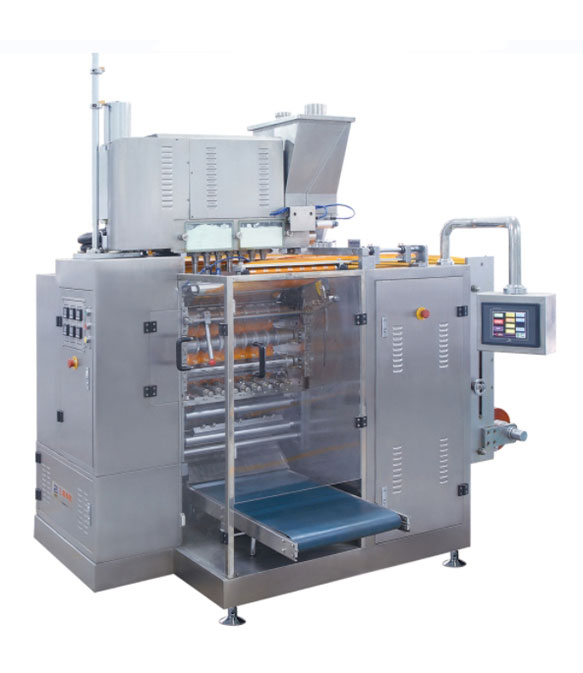
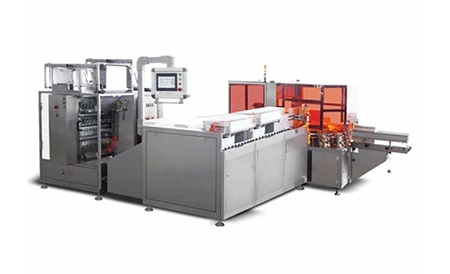
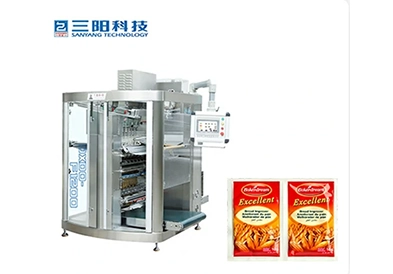
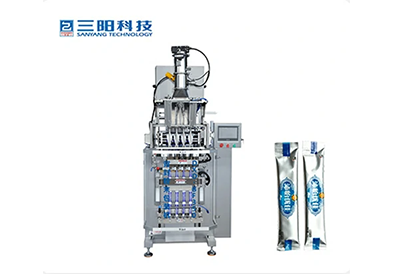
You're evaluating a capital equipment purchase, and the question that matters most is always the same: how long until it pays for itself? An automatic granule packing line that replaces manual labor, reduces waste, and increases throughput can deliver a return on investment measured in months—not years. The DXD-BLK800 fully automatic granule sachet packing and cartoning production line was engineered with cost efficiency as the priority: unmanned operation throughout the process, integrated feeding, bag making, filling, sealing, cartoning, and leaflet insertion—all in one continuous workflow. This article examines the financial case for this production line—from the labor savings that reduce headcount to the waste reduction that cuts material costs—and shows you how to calculate your own payback period.
Q: How does this line reduce labor costs compared to a traditional packaging operation?
A: The DXD-BLK800 integrates automatic feeding, box opening, box entry, batch numbering, box sealing, waste rejection, and other functions to achieve unmanned operation throughout the process, reducing labor costs and improving production efficiency. A traditional packaging line requires operators at each station—feeding, bag making, filling, cartoning, leaflet insertion, and quality checking. This line consolidates those roles into a single, automated workflow, significantly reducing headcount.
Q: How much does the line cost to operate on a daily basis?
A: The line consumes 35KW of power and 0.8m³/min of compressed air at 0.7Mpa. The total power consumption is comparable to running a single piece of heavy equipment, yet the line replaces multiple machines and operators. Energy costs are predictable and manageable, while the savings from reduced labor and waste are substantial.
Manual or semi-automated packaging operations have hidden costs that go beyond the obvious payroll line. The DXD-BLK800 was designed to eliminate these costs entirely.
A fragmented packaging workflow—weigh on one machine, fill on another, seal on a third, then manually transfer to a cartoning line—creates multiple opportunities for error. Mis-weighed bags, poorly sealed sachets, and damaged cartons all generate waste and rework. The DXD-BLK800 integrates automatic feeding, box opening, box entry, batch numbering, box sealing, waste rejection, and other functions to achieve unmanned operation throughout the process. By automating the entire workflow, the line eliminates the human errors that drive rework and waste.
Each transfer between machines requires handling—and each handling step adds labor time, creates opportunities for damage, and consumes floor space. The DXD-BLK800's integrated design eliminates these transfer steps entirely. From the moment granular material enters the hopper to the moment finished cartons exit, the line runs with minimal human intervention.
The DXD-BLK800 is designed for unmanned operation throughout the process. This isn't a machine that still needs an operator watching every move—it's a line that runs itself.
A traditional granule packaging line requires multiple operators: one for feeding, one for bag making and filling, one for cartoning, and one for quality checking. That's four operators per shift. Across three shifts, that's twelve operators. The DXD-BLK800 requires 2-3 operator per shift for material loading and quality monitoring.
The DXD-BLK800 includes features that minimize material waste—savings that show up directly on your cost per unit.
During operation, the equipment can automatically detect and handle abnormal situations, such as empty bags not being unpacked, effectively avoiding material waste and improving production efficiency. When an empty or defective sachet is detected, the line rejects it and continues running—no manual inspection required, no defective product reaching the cartoning stage.
A single empty bag may not seem like much, but over thousands of cycles, the cumulative savings are significant. At 30-50 cycles per minute, even a 1% defect rate would generate thousands of wasted sachets per shift. The automatic detection and rejection system catches these defects early, preventing material waste at every stage of the process.
The DXD-BLK800 delivers a total capacity of 30-90 boxes per minute. This throughput, combined with the line's automation features, makes the investment case compelling.
The sachet section runs at 30-50 bags per minute. The cartoning section matches this at 10-100 boxes per minute. Total line capacity is 30-90 boxes per minute. This range allows you to scale production as demand grows—without adding labor or floor space.
At 30-90 boxes per minute, you're producing thousands of finished cartons per shift. This throughput, combined with the reduced labor and waste, generates the volume needed to recover your investment quickly. The line's compact and reasonable structure also ensures that you're not paying for excess floor space you don't need.
| Section | Parameter | Specification |
|---|---|---|
| DXD-BK800 (Sachet) | Bag Length Range | 50-160mm (adjustable) |
| Bag Width Range | 20-60mm | |
| Packing Speed | 30-50 times/min | |
| Filling Capacity | 1-50ml | |
| Max Film Width | 800mm | |
| SYZ-120 (Cartoning) | Running Speed | 10-100 boxes/min |
| Carton Quality | 250-300g/m² | |
| Carton Dimension | (70-180)×(35-85)×(14-50)mm | |
| Production Line | Total Capacity | 30-90 boxes/min |
| Power Supply | 380V 50Hz | |
| Total Power | 35KW | |
| Air Consumption | 0.8m³/min at 0.7Mpa |
The DXD-BLK800 serves multiple industries where packaging volume and labor costs make automation the clear choice:
The line is designed for the pharmaceutical, food, and daily chemical industries, and is particularly suitable for automatic packaging of granular materials and small and medium-sized bags with metering requirements. Whether it's pills, granules, or small granule pharmaceutical preparations, this production line can achieve efficient and accurate packaging. In pharmaceutical manufacturing, where labor costs are high and quality standards are strict, the ROI case for automation is especially strong.
For food manufacturers packaging coffee, sugar, monosodium glutamate, and other granular food products, the DXD-BLK800 provides the throughput needed to meet growing demand without adding headcount. The line's compact and reasonable structure also makes it suitable for facilities where floor space is at a premium.
Q: How soon can I expect a return on this investment?
A: The payback period depends on your labor costs, production volume, and current packaging efficiency. However, the combination of reduced labor (unmanned operation throughout the process), automatic waste detection and rejection, and high throughput (30-90 boxes/min) means that many operators recoup their investment within 12-18 months. Some high-volume operations see payback in under a year.
Q: What are the biggest cost savings compared to manual or semi-auto lines?
A: The three largest savings come from labor reduction (unmanned operation reduces headcount significantly), waste reduction (automatic detection and rejection prevents material waste), and increased throughput (30-90 boxes/min with integrated workflow). Combined, these savings deliver a payback period that makes the investment decision straightforward.
An automatic granule packing line that combines integrated workflow, unmanned operation, and automatic waste reduction is the foundation of any cost-effective granular product packaging operation. The DXD-BLK800 delivers integrated feeding, bag making, filling, sealing, cartoning, leaflet insertion, and waste rejection in one continuous process, a sachet section running at 30-50 bags per minute with bag sizes from 50-160mm and filling capacity from 1-50ml, a cartoning section running at 10-100 boxes per minute with automatic leaflet insertion, compact and reasonable structure for small footprint and easy deployment, servo/stepper motors with touchscreen control for simple operation, and automatic detection and rejection of abnormal situations to minimize waste.
Whether you're packaging pharmaceuticals, food products, or daily chemicals, the DXD-BLK800 offers the integration and automation that production managers need. With unmanned operation throughout the process and a total capacity of 30-90 boxes per minute, it's built for high-volume production without the high labor costs.
Contact the manufacturer for a custom production line consultation → their team can help you configure the line for your specific product, bag size, and carton requirements. Get a granule packing line that pays for itself faster than you think.

 English
 Pусский
 Español
 عربي
عربي .jpg)