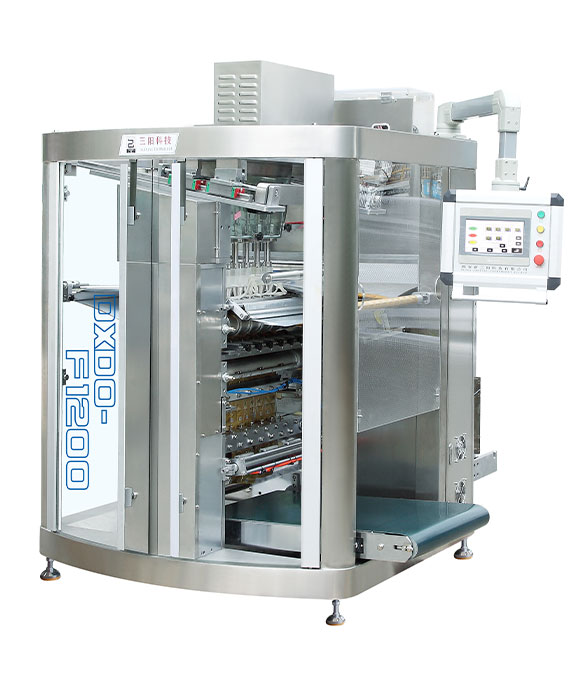
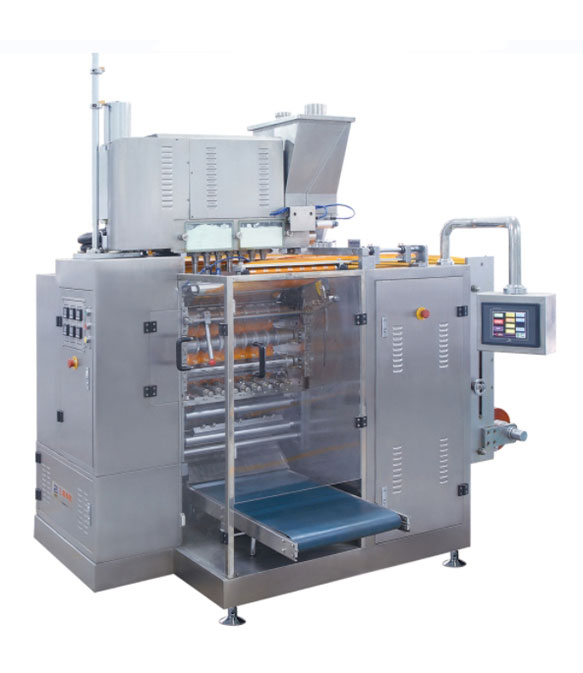
You're running a sachet line and want to know how a Powder Packaging Machine closes a pouch without leaking. The seal forms when heated jaws press two film layers together while powder drops into the open pouch. This article explains the four-side sealing sequence, what keeps fine powders out of the seal zone, and how to match a multi-lane system to your sachet size and output.
A four-side seal sachet starts as two layers of film moving through the machine. The machine seals the vertical edges first, forming a tube-like channel. Then it seals the bottom edge, drops a measured dose of powder into the open pouch, and closes the top edge. The result is a flat pouch with seals on all four sides.
For fine powders, the challenge isn't the sealing motion itself. It's keeping the powder inside the pouch while the seals close. A dust cloud at the sealing jaw can trap particles in the seal area, which weakens the bond and creates leakers. That's why powder systems need tight control over dosing, film tension, and jaw timing.
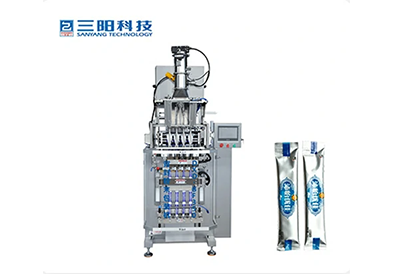
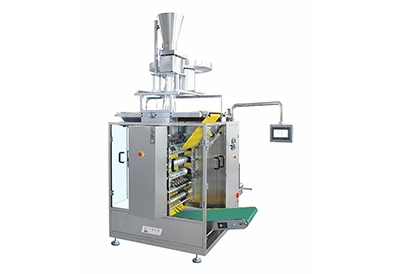
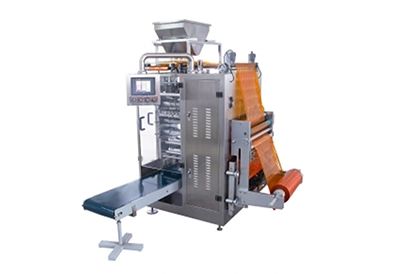
The four-side sealing format is built for small powder sachets. It runs roll stock through a multi-lane path, so you get several pouches per machine cycle instead of one. That lane count is one of the first things to match to your target output.
Check the dosing method first — auger, volumetric cup, or screw feeder — because it determines how consistently each sachet gets the same fill weight. Then look at seal pressure and jaw temperature control, since fine powders are unforgiving if the seal zone gets contaminated. Film tension matters too: too loose and the pouch wrinkles, too tight and the film stretches or tracks off-center. You'll also want to confirm changeover time for sachet width and length, because small-dose products often run in short batches with different pouch sizes. A machine that stores recipes and uses quick-change tooling keeps those changeovers short and repeatable, which matters more than raw speed when you're running several SKUs on one line.
Dust control starts at the fill point. If the dosing head releases powder too fast, air carries particles upward and outward. A slower, controlled drop keeps the powder stream tight and reduces airborne dust. Some systems use a shroud or vacuum port near the fill zone to capture stray particles before they reach the sealing jaws.
Seal quality is the next checkpoint. Even a small amount of powder trapped in the seal area can create a channel that leaks later. You'll want to inspect seals at startup and after any changeover. A quick peel test or pressure test on a sample sachet tells you more than a visual check alone.
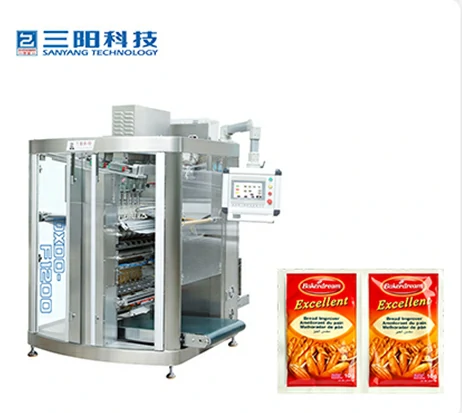
Four-side sachets work best when the dose is small, the powder flows, and the pouch needs a clean, flat profile. Food powders like instant coffee, milk powder, and soup base are classic fits because the sachet is easy to tear, stack, and ship. Pharmaceutical powders need tighter fill accuracy and clean seals, so the dosing system and dust extraction get more attention. Chemical powders often require barrier films or special contact materials, which changes the film specification more than the sealing format. If your powder is sticky, hygroscopic, or prone to clumping, you'll need to test it on the actual machine before committing to a full line. A Powder Packaging Machine with adjustable dosing and sealing parameters gives you room to tune the process instead of forcing the powder to fit a fixed setup.
| Parameter | DXDO-F1200E Specification |
|---|---|
| Pouch length | 50-120mm (adjustable) |
| Pouch width | 60-105mm |
| Packing speed | 30-50 times/min |
| Filling capacity | 1-30ml |
| Applicable film | PET/AL/PE, PET/PE, NY/AL/PE, NY/PE |
| Max film width | 1200mm |
| Max film diameter | Φ300mm |
| Film core diameter | Φ75mm |
| Electric source | 380V 50Hz (customizable) |
| Total power | 15KW |
| Overall dimensions | 2200×1900×2200mm |
| Construction | SS 304 stainless steel |
Common powder types that run well on four-side sachet systems include:
Food powders — flour, coffee, cocoa, milk powder, seasoning blends
Pharmaceutical powders — oral rehydration salts, granulated medicines, supplement blends
Chemical powders — desiccants, stabilizers, pigment powders, cleaning agents
Agricultural powders — soluble fertilizers, seed treatments, growth regulators
Each product behaves differently. Flour tends to fluidize and float; coffee powder is heavier and drops faster; pharmaceutical powders may need stricter fill-weight control. The machine settings follow the powder, not the other way around.
Yes, with the right tooling. Sachet width and length are set by the sealing jaws and the film path. Changing from one size to another usually means swapping tooling, adjusting film tension, and recalibrating the dosing system. If you plan to run several sizes, choose a machine with quick-change tooling and a control system that stores recipes for each format.
You control the drop, not the seal. A slower fill, a shorter drop distance, and a vacuum or shroud near the fill zone all reduce the chance of powder reaching the jaws. You also need to check seal pressure and temperature — if the seal is too cold or too light, powder particles can sit in the seal area and create a leak path. Regular peel tests and sample checks catch the problem before it reaches the carton.
It depends on the powder and the shelf life you need. Standard laminates work for many food powders. Hygroscopic or oxygen-sensitive powders need barrier films with layers that block moisture, oxygen, or light. The film must also run well on the machine — if it's too stiff or too slippery, it won't track properly through the sealing jaws. Test the film on the actual machine before you commit to a large order.
Count the lanes and multiply by the machine cycles per minute. If the machine runs four lanes and cycles 30 times per minute, you get 120 sachets per minute. The actual output depends on fill time, seal time, and film advance. A heavier dose or a longer seal time lowers the cycle rate. Match the machine speed to your downstream cartoner or case packer so you don't create a bottleneck.
A Powder Packaging Machine should match your powder, pouch size, and output target — not the other way around. The DXDO-F1200E Four Side Small Powder Packing Machine from Chinapack Machinery is built for multi-lane four-side sachet production, with project-specific lane counts, dosing options, and tooling for small powder doses. If you're planning a food, pharmaceutical, or chemical sachet line, talk to our team and share your powder type, sachet dimensions, and target output — we'll help you confirm the right configuration before you commit.

 English
 Pусский
 Español
 عربي
عربي .jpg)