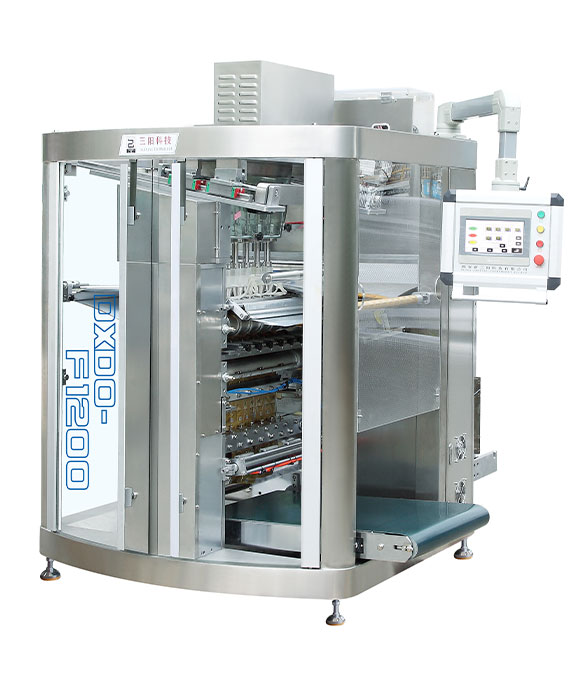
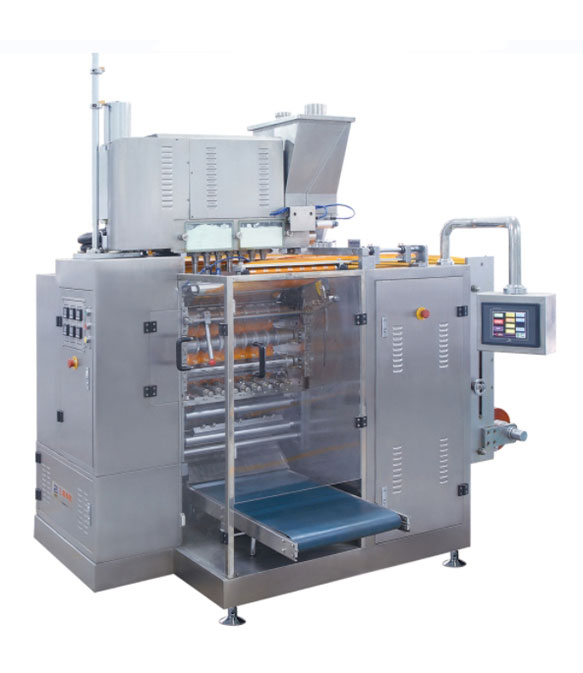
Food packaging machines play a crucial role in modern food manufacturing by ensuring products are filled, sealed, and packed efficiently while maintaining hygiene and quality standards. From powders and granules to liquids, sauces, and tablets, different packaging solutions are designed to meet the requirements of various food forms and production capacities. Understanding the types of food packaging machines helps businesses select the right system to improve productivity and accuracy.
A packaging machine is specialized equipment used to automatically measure, fill, seal, cut, and pack food products into bags, bottles, sachets, pouches, or containers. These machines enhance production efficiency, reduce labor costs, maintain packaging consistency, and ensure food safety. Depending on the product type and application, food packaging machines are available in multiple configurations and automation levels.
An automatic granule packing line is designed for free-flowing or semi-free-flowing granular products.
Typical products: rice, beans, sugar, nuts, seeds, cereals, snacks, pet food.
Key features:
♦ High-precision weighing through multi-head scales or volumetric cups
♦ Fast filling and sealing for large or small bags
♦ Supports pillow bags, gusseted bags, and zipper pouches
♦ Ensures stable operation and high packaging accuracy
These systems are ideal for mass production where product uniformity and speed are essential.
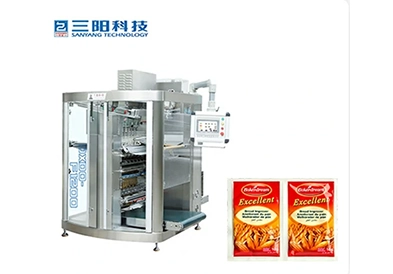
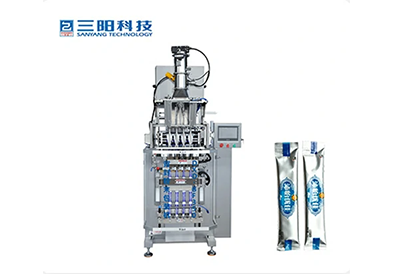
This packaging line is tailored for fine and ultra-fine powders, which require sealed and dust-free environments.
Typical products: milk powder, spices, flour, coffee powder, protein powder, chemical powders.
Key features:
♦ Auger screw dosing for extremely accurate filling
♦ Dust-proof design to maintain hygiene and prevent contamination
♦ Compatible with stick packs, sachets, bottles, and large pouches
♦ High automation with continuous feeding and sealing
It is widely used in industries where precision and cleanliness are crucial.
An automatic liquid packaging line is used for free-flowing liquids that require drip-free and stable filling.
Typical products: water, juice, oil, vinegar, milk, beverages.
Key features:
♦ Flowmeter or piston pump dosing for accurate filling
♦ Leak-proof sealing technology
♦ Suitable for pouches, bottles, sachets, and spouted bags
♦ Stainless-steel hygienic structure for safe production
It guarantees efficient and contamination-free liquid packaging.
This line is designed for viscous or semi-viscous products with or without small particles.
Typical products: ketchup, chili paste, jam, honey, mayonnaise, salad dressing, hotpot base.
Key features:
♦ High-viscosity piston filling system
♦ Supports chunk-containing sauces
♦ Strong sealing performance to prevent leakage
♦ Customizable bag types including 3-side seal, 4-side seal, stick pack, and premade pouches
Sauce packaging lines are essential in food processing industries requiring precision and hygiene for thick materials.
Used for small solid food items such as candies, sugar tablets, health-supplement tablets, and chewing gum.
Typical products: mints, compressed candy, effervescent tablets.
Key features:
♦ Counting or weighing system for accurate quantity control
♦ Automated feeding, filling, sealing, and inspection
♦ Supports sachets, bottles, blister packs, and pouches
♦ Ensures consistency and protects fragile items from damage
This packaging line is ideal for food-grade solid products requiring precise counting and high production speed.
Food packaging machines are essential tools that enhance production efficiency, improve product safety, and ensure consistent output across various food categories. Whether dealing with powders, liquids, granules, sauces, or food tablets, choosing the right packaging system ensures smooth operation, reduced waste, and better product presentation. As automation continues to grow in the food-processing sector, these machines provide reliable and cost-effective solutions for modern factories.
Q1. How do I choose the right food packaging machine?
A: Consider product type, packaging style, production speed, automation level, and hygienic requirements.
Q2. Are food packaging machines customizable?
A: Yes. Most manufacturers offer customized filling systems, bag types, conveyor layouts, and automation configurations.
Q3. What materials can these machines pack?
A: They can handle powders, granules, liquids, sauces, tablets, and even mixed-texture products.
Q4. Do packaging machines require regular maintenance?
A: Routine cleaning, lubrication, and inspection are necessary to ensure stable performance and longer machine lifespan.
Q5. Can one machine pack multiple food types?
A: Some multifunctional machines can handle different products with the right dosing system, but dedicated lines generally provide higher accuracy and efficiency.

 English
 Pусский
 Español
 عربي
عربي .jpg)