ROI of an Automatic Powder Filler


Beyond Labor Savings: The True ROI of an Automatic Powder Filler

For production managers and business owners in industries from food and pharmaceuticals to chemicals and cosmetics, powder packaging is a critical yet often challenging operation. The initial thought when considering automation typically jumps to labor cost reduction. While significant, this is merely the tip of the iceberg. The real return on investment (ROI) from an automatic powder filler is woven into a complex fabric of increased accuracy, reduced waste, enhanced compliance, and scalable growth. This guide will walk you through a comprehensive framework to calculate the true ROI and make an informed decision for your operation.

The Hidden Inefficiencies of Manual and Semi-Automatic Powder Filling

Before diving into ROI, it's crucial to quantify the pain points. Manual or semi-automatic filling isn't just about hourly wages. It's about the cumulative impact of:

  • Inconsistent Fill Weights: Human variability leads to giveaway (costing you product) or under-filling (risking regulatory non-compliance and customer dissatisfaction). This "invisible loss" can amount to 2-5% of your total powder usage.
  • Production Bottlenecks: Speed is limited by human endurance. Scaling up often means adding more lines and more people, not increasing the efficiency of a single line.
  • Contamination Risks: Increased human contact raises the risk of product contamination, a critical concern in food and pharmaceutical GMP environments.
  • Data Blindness: Manual processes offer little to no data on output rates, downtime causes, or precise yield, making continuous improvement a guessing game.

These factors create a ceiling on your productivity and profitability that is difficult to break through without technological intervention.

Core Knowledge: What Defines a Modern Automatic Powder Filler?

Understanding the key components of an advanced system is essential for a fair ROI assessment. A modern powder packaging machine is not just a filler; it's an integrated system. Key differentiators include:

  • Filling Technology: Auger fillers (ideal for fine, non-free-flowing powders), volumetric cup fillers (for granular products), and net weight scales (for high-value, precise applications). The choice dramatically impacts accuracy and speed.
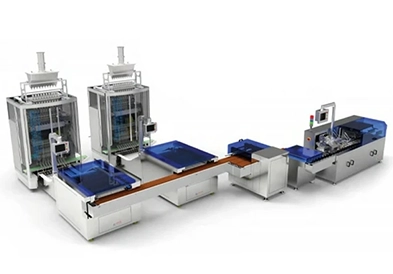
  • Integration Level: A standalone filler vs. a fully integrated line with automatic bag feeding, filling, sealing, coding, and checkweighing. Integration multiplies labor savings.
  • Control System: Modern PLCs with touchscreen HMIs allow for recipe storage, quick changeovers, and production data tracking.
  • Hygienic Design: Easy-clean surfaces, sanitary augers, and dust extraction ports are not optional for many industries; they are essential for reducing cleanup time and maintaining quality.

Selecting the right configuration is the first step toward maximizing ROI. For a deeper look at equipment specifications and configurations, reviewing the range of available systems can provide clarity. Explore equipment configurations and specifications.

The Full Cost Picture: Beyond the Purchase Price

A common mistake is calculating ROI based solely on the machine price versus labor savings. The true Total Cost of Ownership (TCO) and the subsequent ROI must include:

1. Tangible Hard Costs:

  • Capital Expenditure: The purchase price of the machine or line.
  • Installation & Training: Costs for site preparation, utility hookups, and comprehensive operator/maintenance training.
  • Consumables & Energy: Cost of spare parts (augers, filters), lubricants, and the electricity to run the system.
  • Maintenance: Scheduled preventive maintenance and potential unscheduled repairs.

2. Intangible Soft Costs & Savings (The ROI Multipliers):

  • Material Waste Reduction: A 1% reduction in giveaway on a high-value powder can pay for the machine's maintenance annually.
  • Quality & Compliance Savings: Eliminating customer rejections, regulatory fines, and recall risks.
  • Increased Throughput: The ability to run more shifts or meet sudden demand spikes without hiring.
  • Flexibility Value: Quick changeovers allow for smaller, more profitable batch runs.
  • Brand Protection: Consistent, professional packaging enhances brand perception.

Reliability is key to protecting this ROI. A machine that is frequently down erases all calculated benefits. Therefore, the availability of robust technical support and maintenance services is not an afterthought; it's a core part of the investment. Understanding the support structure behind your equipment is crucial for long-term value. Learn about operational reliability and support services.

A Step-by-Step Framework for Calculating Your ROI

Follow this actionable guide to build your own ROI model:

Step 1: Quantify Your Current Costs.

  • Labor: Number of operators per shift, shifts per day, fully burdened hourly rate.
  • Material Waste: Weigh overfilled containers from a production run to calculate average giveaway.
  • Rejects/Returns: Track costs associated with underweight or contaminated packages.

Step 2: Define the Automated Scenario.

  • Required output speed (bags/pouches per minute).
  • Target accuracy (e.g., ±2% fill weight variance).
  • Desired level of integration (standalone vs. full line).

Step 3: Calculate Direct Savings.

  • Labor Savings: (Current operators - post-automation operators) x hourly cost x operating hours.
  • Material Savings: (Current waste % - projected waste %) x annual powder usage x cost per kg.
  • Output Increase: Value of additional product packaged per year due to higher speed.

Step 4: Account for New Costs.

  • Annualized machine cost (purchase price / expected lifespan, or lease cost).
  • Estimated annual maintenance & energy cost.
  • Training costs amortized over 3-5 years.

Step 5: Run the Numbers.

  • Annual Net Savings = (Direct Savings) - (New Annual Costs)
  • Simple Payback Period (Years) = Total Machine Cost / Annual Net Savings
  • ROI (%) = (Annual Net Savings / Total Machine Cost) x 100

A well-chosen powder packaging machine often shows a payback period of 12-24 months, with an ROI exceeding 50% per year thereafter.

Real-World ROI: More Than Just Numbers

Consider a mid-sized spice company. They invested in an integrated auger-based powder filling line. The direct calculation showed a 20-month payback based on labor and material savings. However, the unquantified benefits were transformative:

  • They achieved compliance with major retailer's exact weight regulations, opening new distribution channels.
  • The dust-free, closed system improved air quality in the plant, boosting worker morale and reducing absenteeism.
  • The ability to run "private label" small batches for clients became a new, high-margin revenue stream.

This scenario highlights that the highest ROI often comes from enabling strategic business growth, not just cutting costs. Different industries face unique challenges, from food safety to pharmaceutical sterility. Seeing how similar challenges have been solved can provide valuable context for your own ROI projection. Discover industry-specific solutions and case studies.

Conclusion: Investing in Precision and Growth

The journey to automating your powder packaging is fundamentally an investment in precision, control, and future-ready growth. The ROI extends far beyond the balance sheet, embedding itself in product quality, market reputation, and operational agility. By following the structured framework above, you can move from a vague notion of "saving on labor" to a compelling, data-driven business case.
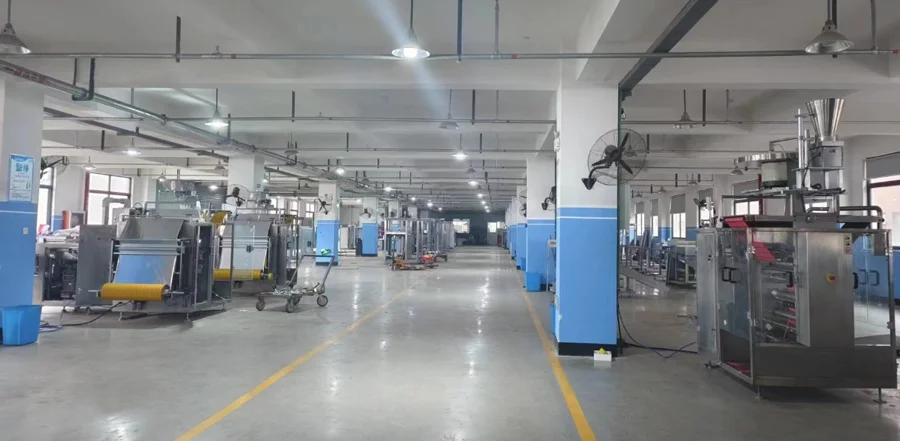
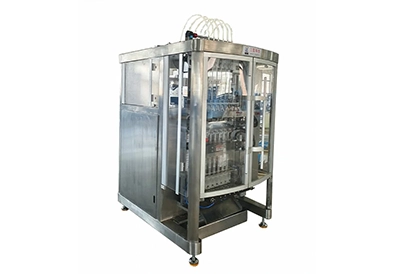
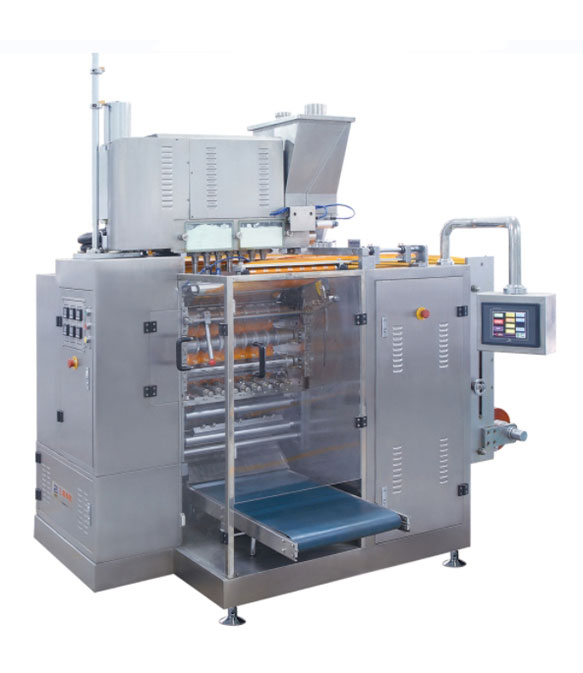
automatic powder packaging machine line

If you're looking for professional solutions to accurately calculate your potential ROI and explore technology that matches your specific powder characteristics and output goals, exploring what a seasoned provider like Sanyang offers can be an excellent next step. Their experience across diverse industries can provide the insights needed to tailor a solution that maximizes your return. For further technical insights and best practices on optimizing packaging operations, our resource library contains detailed information. Contact us to explore more technical insights and best practices. The right partnership can help you see the full picture, turning your packaging line from a cost center into a strategic asset.
Latest news
Why does a powder packaging machine need 10 recipes?
A powder packaging machine with 10‑group recipe memory saves 20 minutes per changeover. 30‑50 bags/min, 1‑30ml, four‑side seal, photoelectric tracking, 0.012‑0.06mm film, 180‑250℃ sealing, PLC, touchscreen.
Screw or Cup Filler for Powders?
Have you ever watched a packaging line struggle with a cloud of cocoa powder or a stream of chili flakes that just won't stop? It’s a common sight in facilities that haven't found the right match betw
ROI of an Automatic Powder Filler
Learn step-by-step how to calculate the true ROI of a Sanyang automatic powder filler. Discover hidden savings in labor, waste, and efficiency. Start your calculation now!
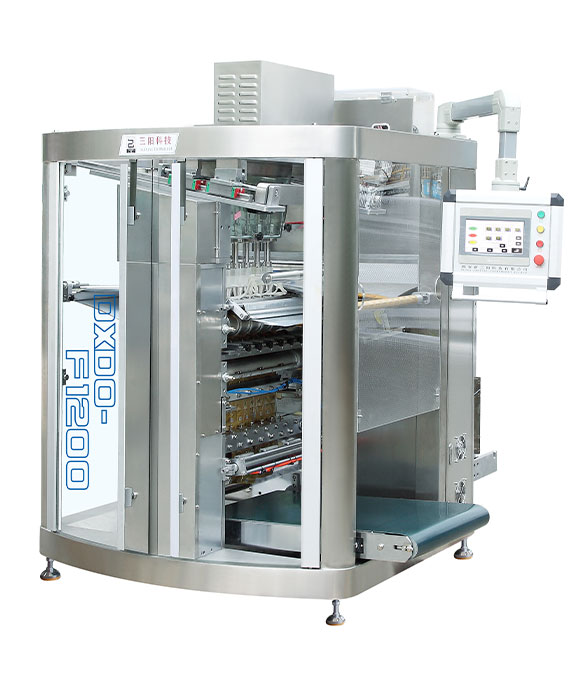
DXDO-F1200E Four Side Small Sachet Powder Packing Machine: Revolutionize Your Powder Packaging Process
Discover the DXDO-F1200E Four Side Small Powder Packing Machine, a high-performance solution for efficient and precise powder packaging. Ideal for food, chemical, and pharmaceutical industries.
Exhibitions

GET A QUOTE

aisha.mediumpack@gmail.com

GET IN TOUCH NOW
Captcha Code
We value your privacy
We use cookies to provide you with a better online experience, analyse and measure website usage, and assist in our marketing efforts.
Accept All