A small spice packaging plant ran two products in the same shift: 30ml single‑use salt sachets followed by 50ml roasted garlic powder pouches. Every switch cost 20 minutes of downtime. The operator pulled out the manual, adjusted the filling screw rotation, reset the vertical and horizontal seal temperatures, and manually aligned the photoelectric mark. After the first 50 bags, the side seal leaked, and production scrap accumulated.
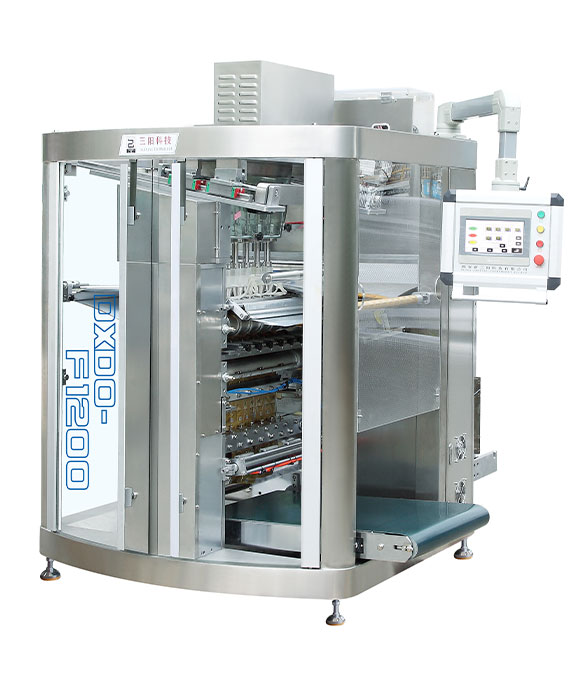
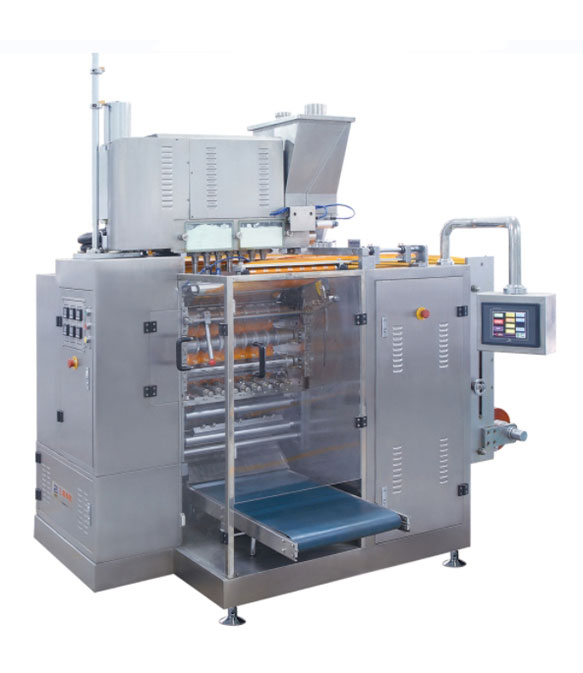
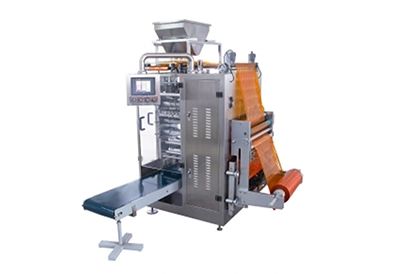
A powder packaging machine with 10‑group recipe memory ends that waste. The DXDO‑F1200E Four Side Small Powder Packing Machine is a compact, PLC‑controlled vertical form‑fill‑seal system for powders and fine granules in the 1‑30ml range. The machine runs 30‑50 bags per minute. The operator stores each product’s parameters once: filling screw speed, sealing temperature, bag length, and photoelectric tracking sensitivity. At the next changeover, the operator recalls the recipe, and the machine adjusts its axes automatically within seconds.
This article explains how the four‑side seal geometry creates a stronger pouch than three‑side alternatives, why photoelectric tracking compensates for print registration drift without stopping the line, and how a 10‑recipe memory turns a 20‑minute changeover into a 2‑minute job when switching from 30ml salt to 50ml garlic powder.
A three‑side seal sachet is folded from a single sheet of film and sealed on three edges. One edge remains the fold line. A four‑side seal sachet is cut from a flat web of film and sealed on all four sides. The DXDO‑F1200E produces the four‑side format, which provides superior oxygen and moisture barrier for products such as milk powder, pharmaceuticals, and dehydrated coffee.
For a hygroscopic powder like whey protein or instant soup mix, the four‑side seal eliminates the folded edge that can wick moisture into the sachet over six months of shelf life. The four sealed edges also create a more uniform shape for retail display and enable higher‑speed filling on automated cartoning lines.
The machine accepts film thicknesses from 0.012mm to 0.06mm (12‑60 microns), including standard polyethylene (PE) and polypropylene (PP) laminates, as well as multi‑layer co‑extruded structures used for oxygen‑sensitive ingredients. The film former and sealing jaws are matched to the bag length (50‑120mm) and width (60‑105mm) required for the product.
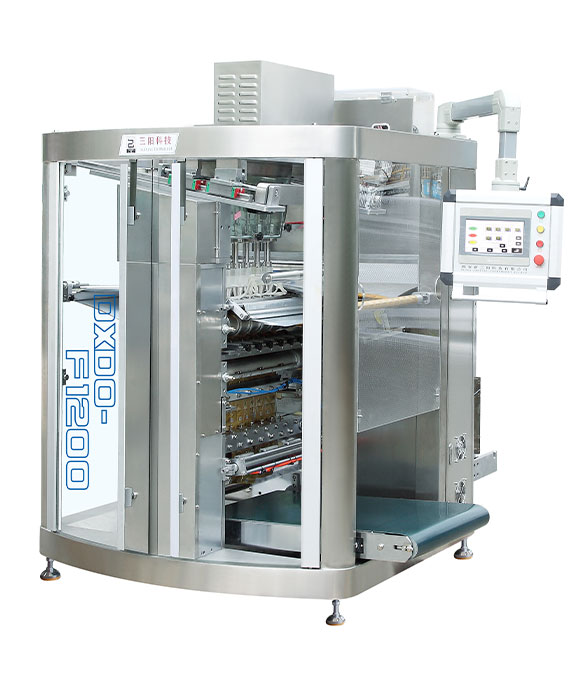
A powder packaging machine that relies on volumetric filling alone will drift when powder bulk density changes. The DXDO‑F1200E uses a twin‑phase screw feed system. The screw runs at high speed for the first 90% of the target fill volume, then switches to a slow‑speed fine‑fill phase for the remaining 10%.
The filling screw material selection is critical: 304 stainless steel for detergents and food, optional 316L for pharmaceutical and aggressive chemical powders. The screw pitch is matched to the powder’s flow characteristics. For fine, cohesive powders such as cocoa or ground spices, the screw includes a mechanical agitator in the hopper to prevent bridging.
| Parameter | DXDO‑F1200E Specification |
|---|---|
| Filling range | 1‑30ml |
| Packing speed | 30‑50 bags/min |
| Bag length | 50‑120mm |
| Bag width | 60‑105mm |
| Film thickness | 0.012‑0.06mm |
| Sealing temperature range | 180‑250℃ |
| Sealing method | Four‑side seal (impulse heat) |
| Control system | PLC with touchscreen HMI |
| Recipe memory | 10 groups |
Printed sachets carry registration marks that tell the machine where to cut and seal. If the film stretches or the printing cylinder slips, the mark shifts. A machine without tracking will cut through the middle of the brand logo.
The DXDO‑F1200E integrates photoelectric tracking and two‑way correction. A photoelectric sensor reads the registration mark in real time. When the mark arrives earlier or later than expected, the PLC calculates the error and adjusts the bag pull length for the next cycle, shifting the cut position back into register. The two‑way correction adjusts in both directions (longer or shorter pull), so the machine does not overshoot.
For a contract packer running printed film for a coffee brand, this tracking eliminates the need to stop the line and reposition the film roll. The operator loads the film, and the machine finds the mark automatically within the first three cycles.
A pouch that leaks at the side seam or blows open during filling points to incorrect sealing temperature. The DXDO‑F1200E allows independent temperature setting for the vertical (back) seal and the horizontal (top/bottom) seal. The sealing temperature range is 180‑250℃, adjustable via the PLC in 1℃ increments.
The vertical seal tracks the film as it moves down the forming tube. The heat soak time is longer. Therefore, the recommended vertical seal temperature is set 10‑15℃ lower than the horizontal seal to prevent burn‑through. For a 40‑micron PE laminate at 40 bags/min, the operator might set vertical seal to 185℃ and horizontal seal to 198℃.
The sealing jaws are PTFE‑coated to prevent powder from sticking. For abrasive powders such as ground turmeric or cement‑based chemical mixes, a consumable spare set of jaws is maintained and replaced after a set number of operating hours to prevent wear and inconsistent seals.
A powder packaging machine that cannot store parameters forces the operator to manually re‑enter filling screw speed, seal temperatures, bag length, and film tracking offset at every product change. The DXDO‑F1200E uses a PLC with a touchscreen HMI for parameter adjustment. The PLC control supports a 10‑group recipe storage system.
For a coffee roaster that runs 2oz, 4oz, and 8oz ground coffee pouches in the same shift, the operator sets the parameters for each size once, then recalls them by recipe number. The machine adjusts filling volume, seal temperature, and bag length without operator calibration. The 10‑recipe capacity covers a range of product categories: milk powder, coffee, detergent, pharmaceutical granules, and chemical powder.
The PLC also logs production counts, downtime events, and power consumption. For a plant manager tracking overall equipment effectiveness (OEE), this data identifies the real bottleneck that stops the packaging line. Alarm logs show the machine’s most frequent fault code, guiding preventive maintenance scheduling.
A powder packaging machine that handles hygroscopic powders must be cleaned regularly to prevent bacterial growth. The DXDO‑F1200E is designed with a modular hopper. The operator loosens the hopper retaining bolts, lifts the hopper and screw assembly off the machine, and sets it on a cleaning stand. The screw, metering tube, and hopper are washed separately, then reassembled. The disassembly time is typically under 15 minutes. For pharmaceutical applications, the machine supports clean‑in‑place (CIP) with cleaning agents circulated through the product contact parts.
Dust control is also critical for explosive powders such as flour, sugar, and chemical dust. The DXDO‑F1200E can be fitted with a dust extraction shroud over the filling nozzle and a vacuum collection system for the sealing station. The chassis uses sealed electrical cabinets to prevent fine powder ingress into relays and the PLC.
When the plant switches from dairy‑based milk powder to acidic fruit powder, cross‑contamination from residual fats can cause off‑flavors in the next batch. The modular hopper is removed and cleaned before the new product is introduced. The entire changeover, including cleaning, is performed within a standard shift.
The DXDO‑F1200E four‑side small powder packing machine is manufactured by Ruian Sanyang Technology Co., Ltd. as part of their ZHONGBAO brand automatic filling packaging line. The machine accepts powders such as coffee, milk powder, detergent, pharmaceuticals, and fine chemicals within the 1‑30ml filling range, runs 30‑50 bags per minute, and seals into four‑side sachets using film thicknesses of 0.012‑0.06mm. A powder packaging machine that stores ten recipes, tracks printed registration marks, runs two‑phase screw filling, and cleans in under 15 minutes delivers the quick changeover and accuracy that small‑scale powder processors require, from coffee roasters to spice packers to pharmaceutical contract manufacturers.
【Request a quote from Sanyang Technology】
Send Sanyang your powder type, required fill volume (1‑30ml), and target bag size (50‑120mm length × 60‑105mm width) for a DXDO‑F1200E specification sheet and recipe preset recommendation.

 English
 Pусский
 Español
 عربي
عربي .jpg)