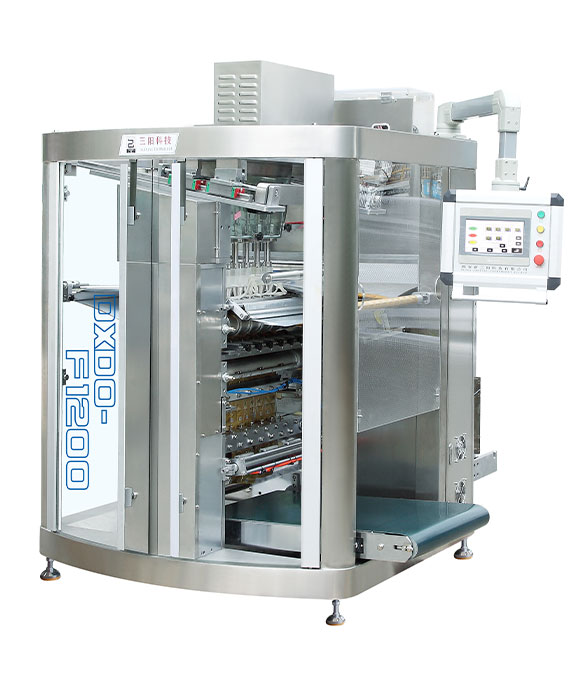
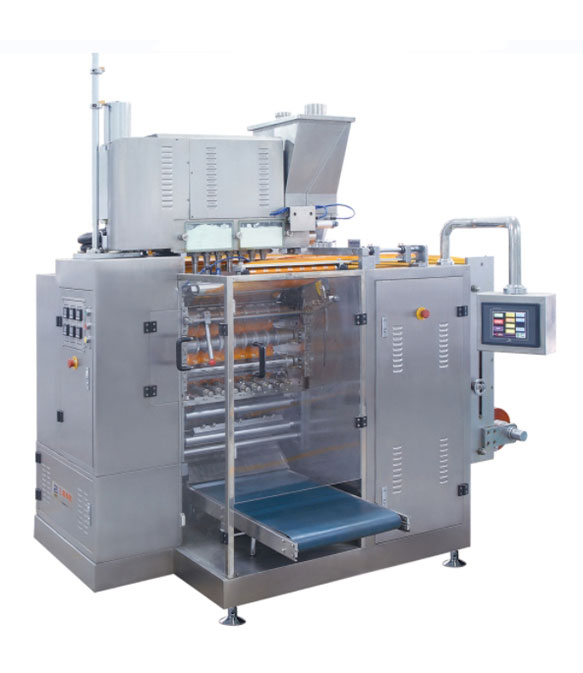
Every shift, a quiet but costly problem repeats itself across countless packaging lines: powder drifting into the air, settling on machine frames, and clinging to package seals. The visible mess is frustrating, but the hidden costs—product loss, rework, and equipment downtime—are far worse.
For operations running powder filling systems, uncontrolled waste often feels like an unavoidable side effect of the product itself. But what if the root cause isn't the powder’s flowability or the humidity in your plant? What if it’s a single, adjustable parameter on your machine: dwell time.
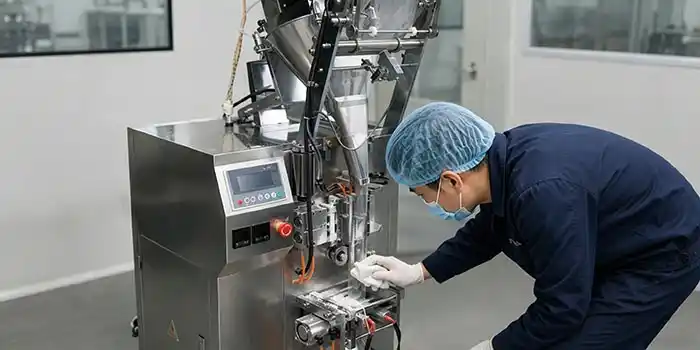
Most powder waste doesn’t come from overfilling. It comes from seal contamination. When a vertical filling machine completes a cycle, heated seal jaws press against the packaging film to close the bag. If the jaws release too quickly—before the film has fully melted and cooled—the seal opens slightly, pulling fine powder into the closure zone.
The result? Weak seals that leak during transport, dusty packaging lines, and rejected product batches.
Conversely, if the jaws dwell too long, the film can melt through or become brittle, again leading to compromised seals and product escape.
Thus, dwell time isn't just a sealing parameter. It directly controls how much powder escapes the package during the closing moment.
Dwell time refers to the duration that heated seal jaws remain closed on the packaging material. On modern powder filling equipment, this is typically adjustable in milliseconds. The right setting depends on three variables:
Film material (thickness, laminate structure, heat-seal coating)
Seal jaw temperature
Line speed
The goal is to find the shortest dwell that creates a full, hermetic seal without film degradation or powder inclusion.
Here is a practical starting approach:
Run a baseline test. Collect powder residue from a 30-minute production run at your current settings.
Reduce dwell time by 15%. Keep temperature and line speed constant.
Check seal quality. Perform a peel test and a dust-tightness check (shake the filled bag over a dark surface).
Iterate. If seals are weak or powdery, increase dwell in 5% increments until seals are clean and strong.
Most operators are surprised to find that the optimal dwell is often 20–30% shorter than their factory default setting. This not only reduces powder contamination but also increases machine cycle speed.
Even experienced technicians can fall into these traps:
Changing dwell without adjusting the temperature. These two parameters work together. Lower temperature requires longer dwell; higher temperature requires shorter dwell. Adjust both systematically.
Using the same dwell time for all bag sizes. Larger bags have more film mass at the seal area, which retains heat longer. They may need shorter dwell times than small pouches.
Ignoring film lot variations. Different batches of the same film can vary in seal layer thickness. Re-check dwell whenever you open a new film roll.
While dwell tuning delivers immediate gains, long-term waste reduction also depends on the mechanical precision of your powder filling equipment. Consistent jaw pressure, even heating, and backlash-free film drive systems prevent the micro-variations that force operators to run longer-than-necessary dwell times as a safety margin.
For high-value powders (pharmaceutical actives, nutritional blends, fine chemicals), even 0.5% waste reduction can save tens of thousands of dollars annually. That’s why many quality managers now include dwell verification in their daily startup checklist.
If your line is currently wasting more than 1% of powder product by weight, implement this five-step protocol:
1. Document current performance
Measure the powder residue collected around the sealing area over one hour. Also, recordthe reject rate due to poor seals.
2. Isolate the variable
Run the same product, same film, same line speed. Only change dwell time.
3. Create a test matrix
Test dwell settings at -20%, -10%, 0%, +10%, +20% of the current setting (e.g., if the current is 200ms, test 160, 180, 200, 220, 240ms).
4. Evaluate three metrics
Seal strength (peel force)
Powder inclusion (visual inspection of seal cross-section)
Leak rate (submersion test for a sample of 50 bags)
5. Set the new standard
Choose the dwell that gives clean seals with the shortest time. Re-train operators on the new setting and lock the parameter on the HMI.
Dwell settings are not permanent. Re-optimize when:
You change the packaging film supplier or grade
Ambient temperature shifts significantly (winter vs. summer production)
Seal jaw heaters or thermocouples are replaced
Line speed changes by more than 15%
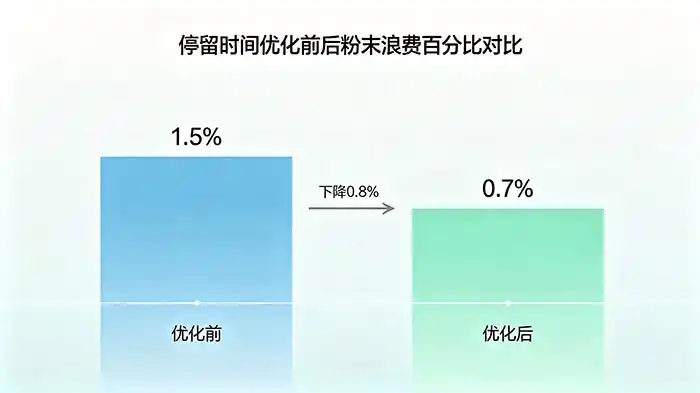
Consider a mid-sized spice packer running 2,000 kg of powder per day. If dwell tuning reduces waste from 1.5% to 0.8%, that saves 14 kg daily. At a product value of 8/kg, annual savings exceed 8/kg, annual savings exceed 40,000. No new equipment. No raw material change. Just a parameter adjustment.
Leading packaging lines now integrate dwell monitoring with their SCADA systems. By tracking seal quality trends over time, they predict when seal jaws need replacement or when film quality drifts. This predictive approach eliminates the “run long just to be safe” mentality that silently wastes powder for months.
If your current machinery with adjustable dwell time control lacks digital monitoring, you can still implement a manual version: take seal samples every two hours and photograph them with a date stamp. Review the image log weekly. You will spot drift long before it becomes a waste problem.
Answer these three questions honestly:
Have you adjusted dwell time for the specific film you are running today?
Do you verify seal cleanliness at least once per shift?
Is your current dwell setting documented and visibly posted on the machine?
If you answered “no” to any, you are almost certainly wasting powder unnecessarily.
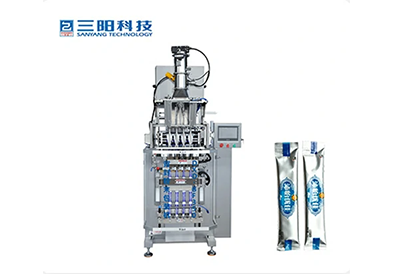
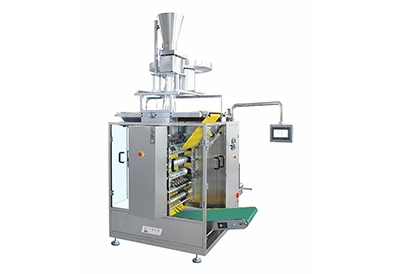
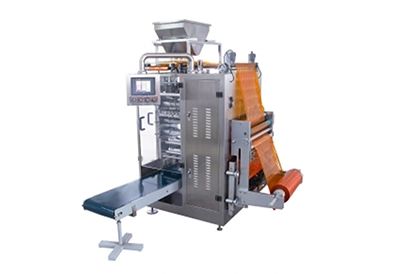
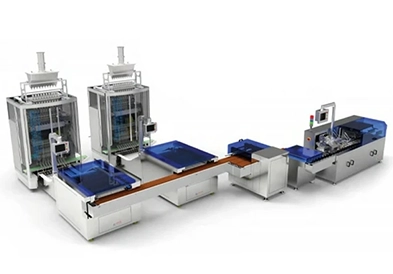
For operations seeking a more precise and repeatable tuning experience, SanYang’s powder packaging solutions include closed-loop seal control that automatically adjusts dwell based on real-time temperature and film feedback. This eliminates guesswork and maintains optimal settings across production runs.
But regardless of the brand on your machine, the principle holds: dwell tuning is the single most underutilized lever for reducing powder waste. Test it on your next shift. The dust on your machine floor will tell the story.
Note: The images in this article are for reference only.

 English
 Pусский
 Español
 عربي
عربي .jpg)